Take something with you · Thesis 02
Nobody reads your menu. They watch fifteen seconds and decide.
Appetite doesn't run on information. It runs on transmission — and only one medium carries time.
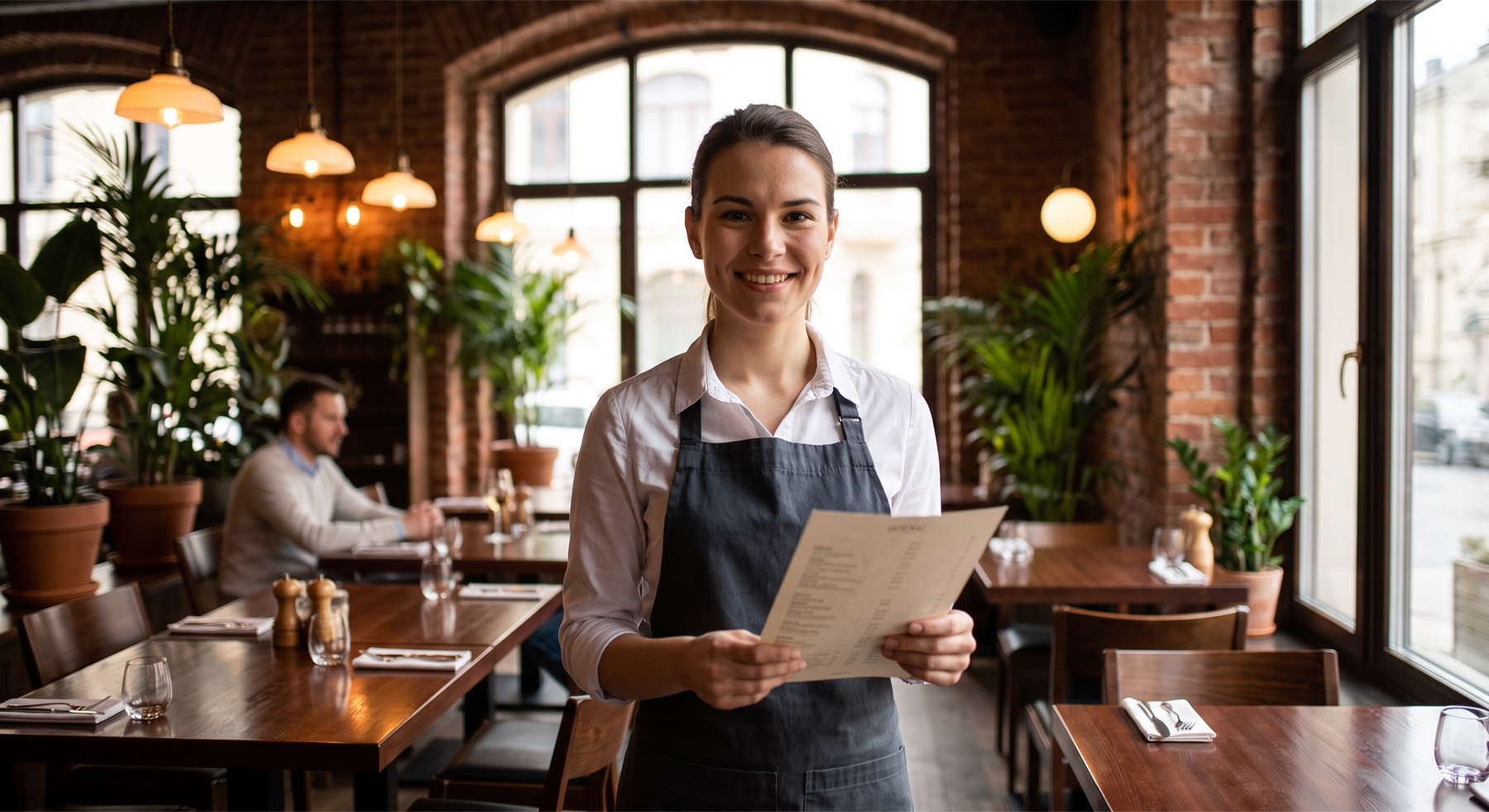
Look at what a menu actually is. A list of nouns, arranged by course, with prices. Three or four adjectives per line, doing an enormous amount of work — braised, house-made, heirloom. It is a precise, efficient, honest document, and it exists for exactly one purpose: to help a person who is already sitting at your table choose between two things they can already smell.
Then we take that document — written for someone inside the room — and put it at the front of the thing that is supposed to bring people into the room.
That's the mistake, and it's so universal it's invisible. The menu isn't a bad piece of writing. It's the right document at the wrong moment, answering a question nobody has asked yet.
Appetite is not information
Nobody has ever become hungry from a specification.
Hunger arrives through the senses, and it arrives fast — faster than reading, faster than deliberating. Something crosses your field of vision and your body responds before your opinion does. That's not a metaphor about marketing; it's the actual sequence, and every good restaurant already knows it, which is why the dessert tray exists and why the pass faces the room in a room designed by someone who was paying attention.
The word "pappardelle" transmits none of that. It transmits a category. It's a pointer to an experience, and pointers only work on people who have already had the experience — which is to say, on your regulars, who don't need convincing.
A menu tells someone what you serve. It has no way of telling them what it is like to be there when it arrives.
What does carry it: the plate landing. Steam coming off it at the moment it hits the table. The weight of the bowl making the wood sound. A thumb wiping the rim before it goes out. The noise in the background of the clip that tells a stranger the room is full without anyone claiming that the room is full.
Twelve seconds each. Neither one says anything about the restaurant. Both say everything.
Video is the only medium that carries time
This is the technical reason, and it's worth being precise about because it explains why photographs — which restaurants have had for a century — never solved this.
A photograph shows a dish. Motion shows a moment. The difference is not fidelity, it's tense. A photo is a claim about how something looked at some point; a clip is evidence of something happening, and the human eye is enormously good at telling the difference between a thing that was staged and a thing that occurred. A plate photographed under lights at 3pm on a Tuesday looks like an advertisement, because it is one. The same plate landing in front of a guest at 7:41 looks like a Friday, because it is one.
And then there's sound, which restaurants throw away almost universally. The sizzle, the room, the half-sentence of someone laughing at the next table — that's the single cheapest transmission of atmosphere available to any business on earth, and it comes free with the footage.
Why the bad footage beats the good film
Here's the part that offends everyone who has ever paid for production.
The most effective restaurant video on the internet is shot vertically, on a phone, by someone with sauce on their hands, in about nine seconds, with a wobble in it. It routinely outperforms a four-thousand-dollar brand film with a drone shot of the coastline and a chef walking through a market in slow motion.
This isn't because audiences have low standards. It's because polish reads as advertising, and advertising is automatically discounted by anyone who has been alive for the last twenty years. Wobble reads as evidence. The viewer is not judging the craft of the video; they are running one test, unconsciously and instantly: is this true, and is it true right now?
Production value signals that someone was paid. Rough footage signals that someone was there.
Which means the industry frame is upside down. "Content" for restaurants got filed under marketing, so it went to marketers, so it got polished, so it stopped working — and then the conclusion drawn was that video is expensive and doesn't convert.
The right frame isn't production. It's documentation. A restaurant generates two hundred usable moments per service and films none of them. The footage isn't a thing to create; it's a thing to stop throwing away.
The unit of the work is the moment, not the video
If it's documentation, then the only real skill is choosing which twelve seconds of a ten-hour day are worth keeping. That's a smaller skill than it sounds, and it has a pattern.
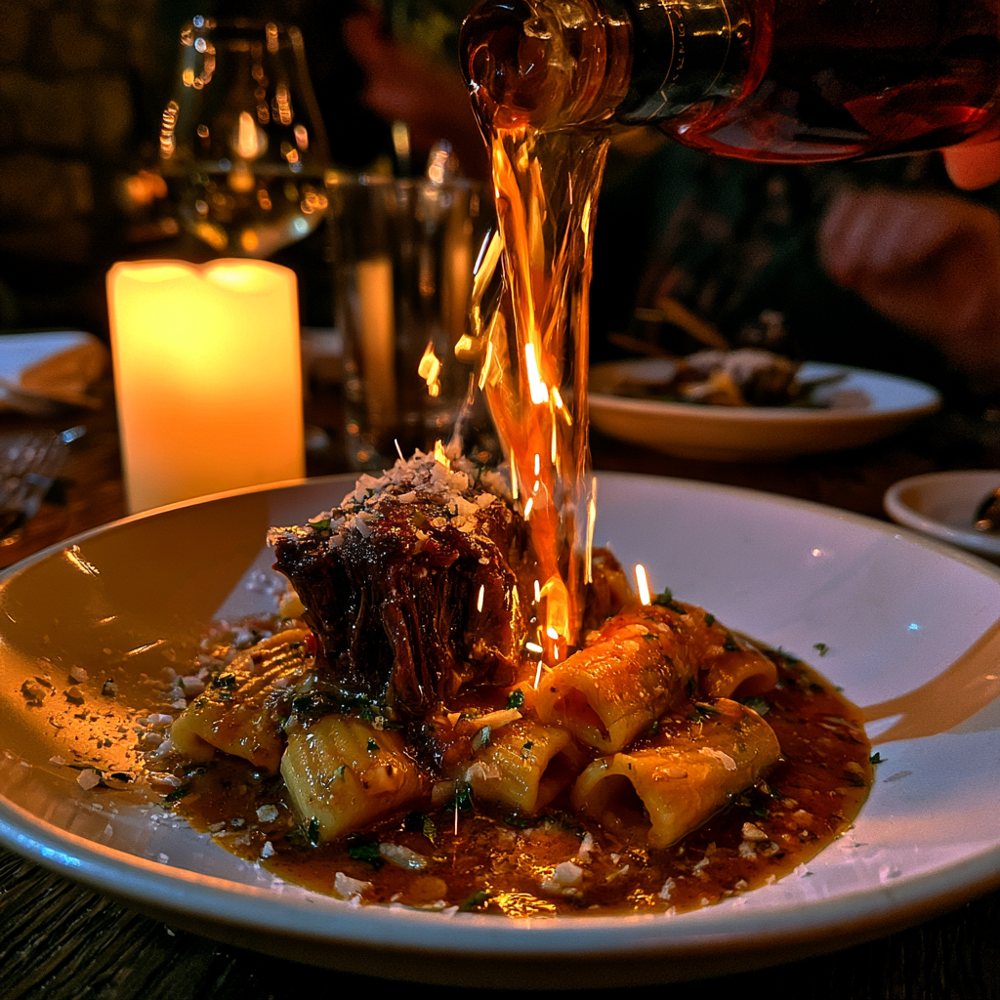
The moments that work are almost always transitions — a change of state, caught mid-change. The pour, not the glass. The cut, not the slice. The pull of the cheese, the crack of the crust, the plate leaving the pass, the plate landing. The eye reads change as alive and stillness as a picture, and a picture is what it's already ignored a thousand of today.
The corollary: the finished, plated, beautifully composed dish — the shot every restaurant takes — is the one moment in the entire sequence where nothing is happening.
The honest counterpoint
Video does not fix a restaurant that isn't good. It transmits what's actually there, faithfully, including the parts you'd rather it didn't — a dead room at eight, tired garnish, a server who doesn't want to be filmed. That's a feature, not a risk: it's why the medium is believed. If the dining room is quiet on a Tuesday, don't film the dining room. Film the hands. There is always something true to transmit; the discipline is only ever pointing at the true thing.
The menu isn't wrong. It's late.
None of this is an argument against menus. Print it, hand it over, put it online in text a stranger and a machine can both read. It answers a real question.
The question it answers is what will I eat — and that question only comes into existence after a much larger one has already been settled: where are we going tonight? That one gets settled somewhere else, in about fifteen seconds, by someone who was never going to read anything.
Take something with you
How to shoot a 12-second dish clip at the pass
No gear, no editing app, no plan. This is the whole technique, and a line cook can learn it in one service.
- Shoot the arrival, not the dish. Start recording before the plate is finished. The usable footage is the last sauce going on, the garnish landing, the plate being picked up, the plate hitting the table. If nothing is changing on screen, you're taking a photograph with extra steps.
- Find the light that already exists. The heat lamps at the pass, the pendant over table nine, the window at four in the afternoon. Put the plate in it and put yourself between the light and the plate at a slight angle, so the steam and the sheen catch. Never the flash — it flattens food into a school lunch.
- Move the camera, not the plate. One slow push in, or one slow arc around, over about four seconds. Movement is what makes a phone clip feel filmed instead of scanned. Two moves is one too many.
- Get close, and get low. Plate at chest height, phone coming down toward it, close enough that the plate leaves the frame at the edges. Distance is the single most common mistake — it turns a dish into a table setting.
- Keep the sound. The sizzle, the scrape, the room. Do not add music later; the room already recorded the only audio that proves anything. If the kitchen is shouting something you'd rather not publish, that's the one clip you don't use.
- Film 25 seconds, keep 12. Overshoot every time — it costs nothing — and use the middle. The first three seconds are always someone finding focus and the last five are always someone realizing they're still filming.
- Vertical, and no captions explaining it. No logo, no "swipe up," no text describing what a short rib is. The clip either transmits or it doesn't, and words on top are an admission that it didn't.
- One a day beats seven on Sunday. Fifteen seconds during a real service, five days a week, is a real practice. A Sunday afternoon photo shoot is a project, and projects end.
Test for whether a clip works, before you post it: watch it with the sound off and ask whether you'd want to eat there. If yes, it's done. If you find yourself wanting to explain it, shoot it again tomorrow — there'll be another one.
Written by the team at Amplified AI, an Ide8 company. We build Amp, an AI Revenue Manager for restaurants, so we plainly have a view on this — which is why the argument above is made without any numbers we can't source, and why the technique works whether or not anyone ever hires us.